


09 Jul The Actor Who Kept the Conversation Going
The Actor Who Kept the Conversation Going
A month ago, on Capitol Hill, an actor spent an entire day doing something you wouldn't expect from someone best known for playing Dwight Schrute on The Office.
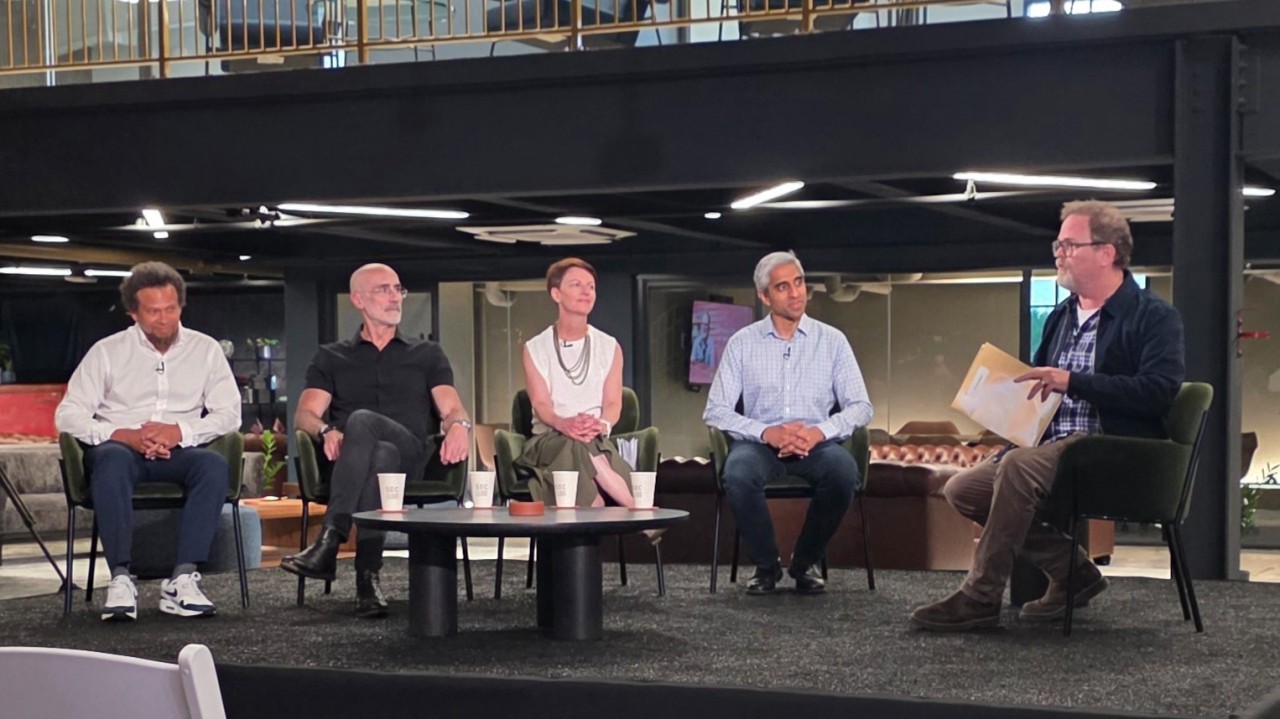
He moderated a panel on social trust with a U.S. senator and a handful of people who spend their careers rebuilding it. He sat down with another senator to talk about the erosion of the common good. Then, that evening, he hosted a live taping of his own podcast, drawing out a former surgeon general, a Harvard professor, a journalist, and a literature scholar on what a spiritual awakening in American life might actually look like.
The actor is Rainn Wilson. And last week, the recording of that evening's conversation went live, right on the heels of the country's 250th anniversary, pulling that entire day back into the conversation for anyone who wasn't in the room: the letter that inspired it, the people who spoke, the questions that got asked. He also wrote up the whole trip, letter included, in his Soul Boom Dispatch newsletter.
I think timing matters, and not just by coincidence.
Wilson has spent the last several years building Soul Boom, a podcast and a book built around a simple bet: that people are hungrier for conversations about meaning, spirituality, and connection than our culture usually gives them credit for. He's also, quietly and without making it the center of his public identity, a member of the Bahá'í community.
That combination puts him in an unusual position. He's not preaching from inside a faith community to people who already agree with him. He's translating a spiritual case for renewal into a language a much wider audience will actually sit still for.
That's a skill I care deeply about because it's the same one SparkAnew is trying to build in a different medium. The questions people bring to a "third place," a café, a bookstore, a community studio, are rarely framed in spiritual language either. But underneath "where can I go to feel like I belong here" is the same question Wilson was asking his guests on that stage: what does it actually take for people to trust each other again?
What struck me watching how this unfolded is that Wilson didn't just show up and leave. A month later, timed deliberately to the anniversary, that conversation surfaced again for people who'd never heard of the event in the first place. That's the difference between attending a conversation and carrying one. It's also, I'd argue, the harder job.
I don't think you need to host a podcast or share a faith tradition with anyone in that room to take the lesson. The lesson is smaller and more available than that: if something you were part of mattered, don't let it end when the room empties out. Bring it back to the people who weren't there.
What conditions help strangers become neighbors? Rainn Wilson's answer, at least this month, was: find the people already doing the work, put them in a room together, and then don't stop talking about it once you leave.
No Comments